TABLE OF CONTENTS
- 1. Introduction
- 2. Editing an EtD template
- 3. Templates for management questions
- 4. Templates for diagnostic questions

1. Introduction
In GRADEpro, the main tool to develop a recommendation is the Evidence to Decision table. It facilitates the process of going from evidence to a recommendation.
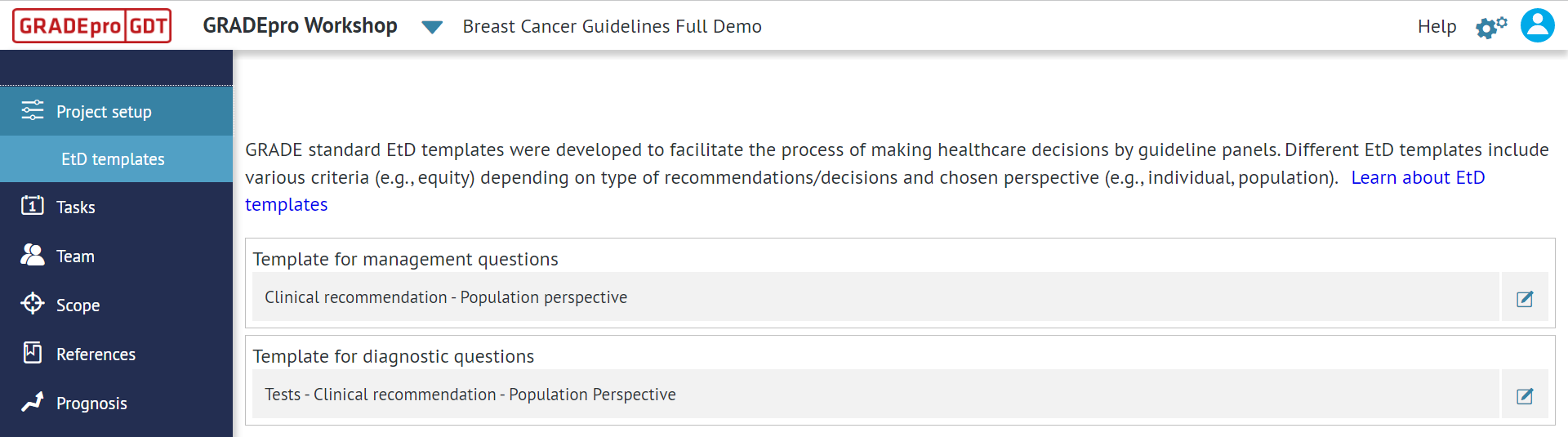
Since GRADEpro offers various formats of PICO questions and evidence (SoF) tables, it also enables you to choose which EtD version you want to use or which elements of the template you want to hide. It is also possible to display the Evidence to Decision table in a different language.
Changes to the EtD template can be made in the EtD templates tab in the Project setup section.
2. Editing an EtD template
The EtD template can be edited in four ways:
- 2.1 Selecting different templates
- 2.2 Changing the language of the template
- 2.3 Removing parts of the template
- 2.4 Adding a custom criterion
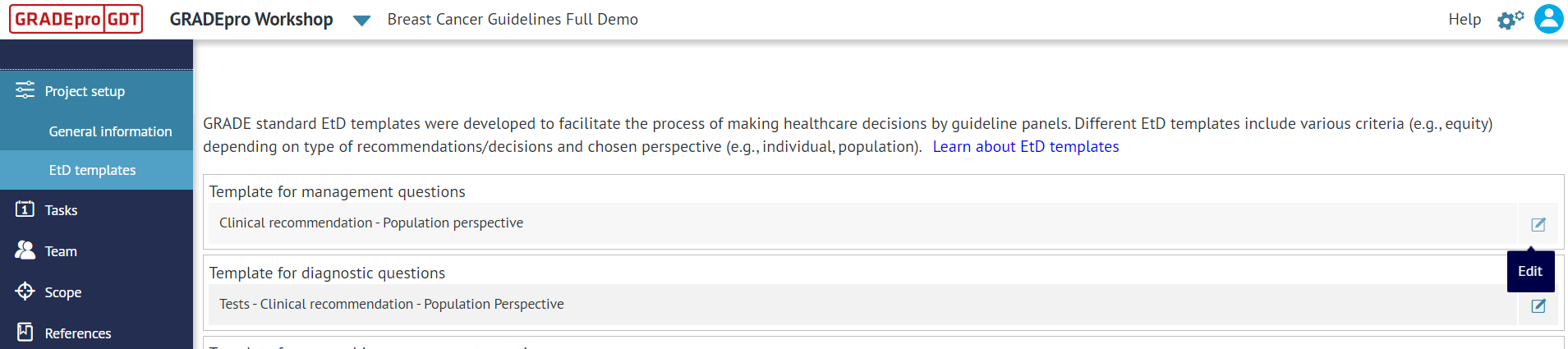
To enter the edit mode for a template, use the edit icon on the right-hand side.
2.1 Selecting different templates
You can select between the templates described below by choosing the name of the template from the dropdown.
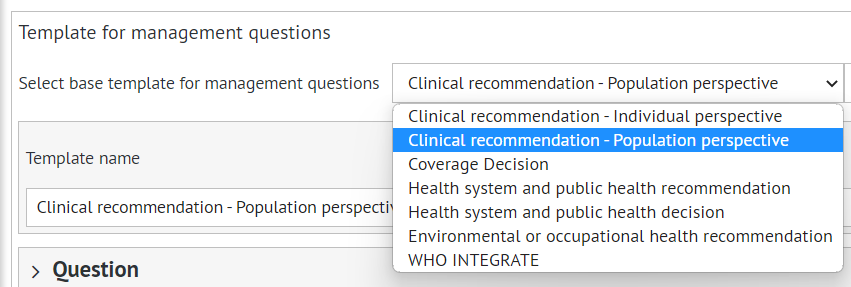
Once you choose a template, you need to save changes with the button below.
2.2 Changing the language of the template
The language that the Evidence to Decision table is displayed in is set separately from the language of GRADEpro. Any user can choose to display their GRADEpro interface in one of the available languages. However, since the Evidence to Decision table is usually collaborative work, its content cannot change for each team member separately. For that reason, the language of the EtD is set within a project and is independent of the interface settings of particular users.
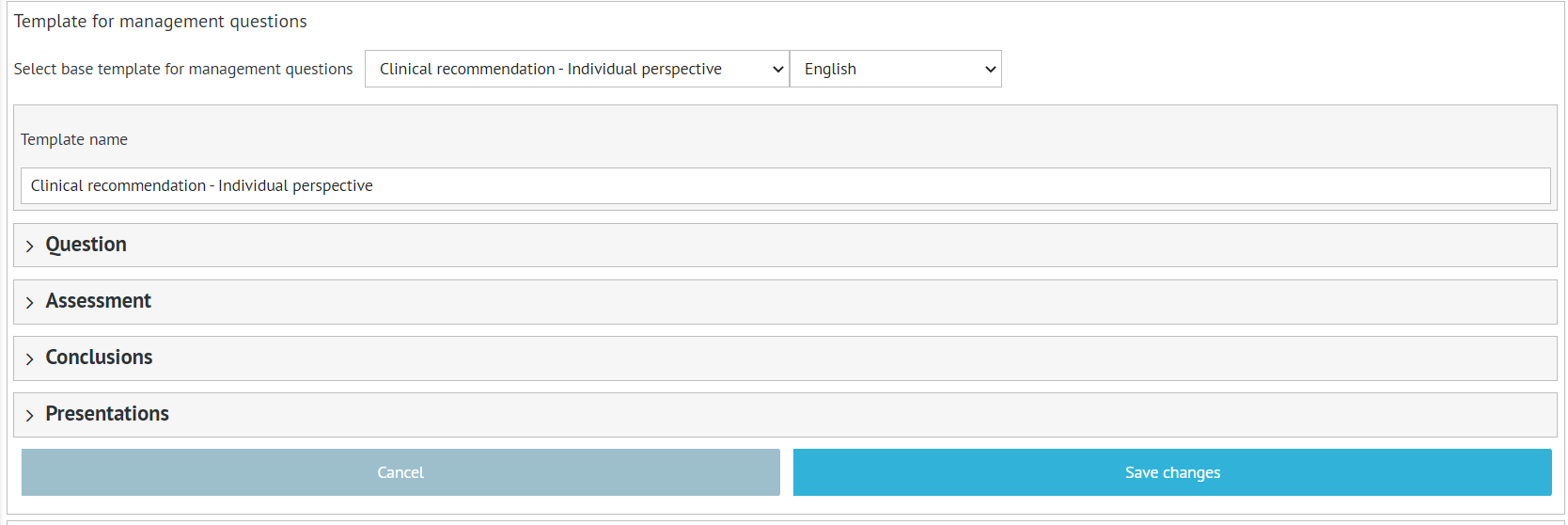
The language of the EtD can be changed by selecting a language from the dropdown next to the template name.
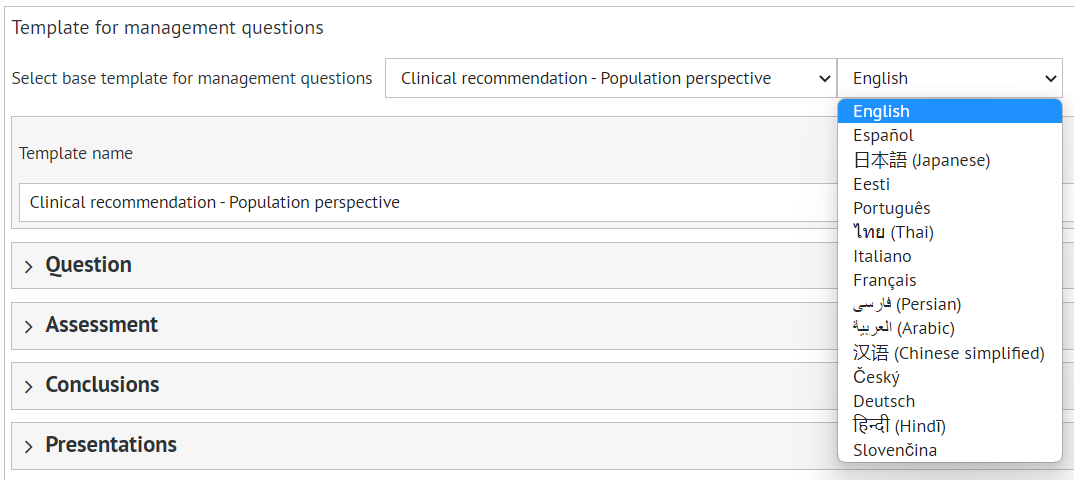
Once you choose a language, you need to save changes with the button below.
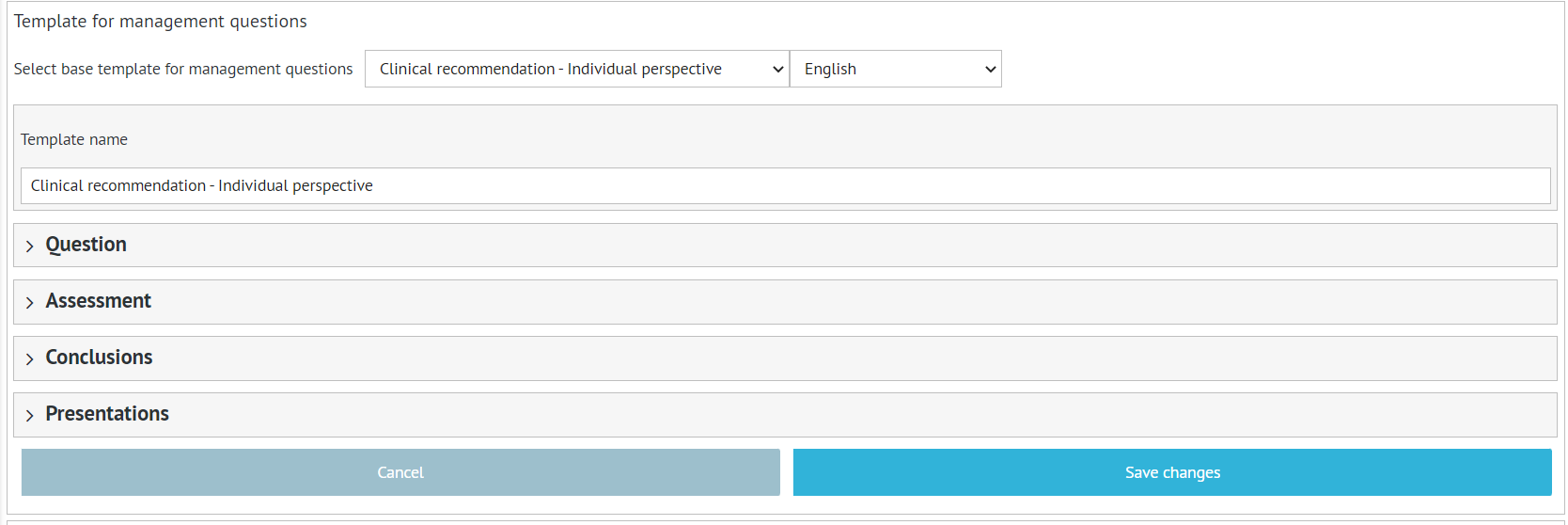
2.3 Removing parts of the template
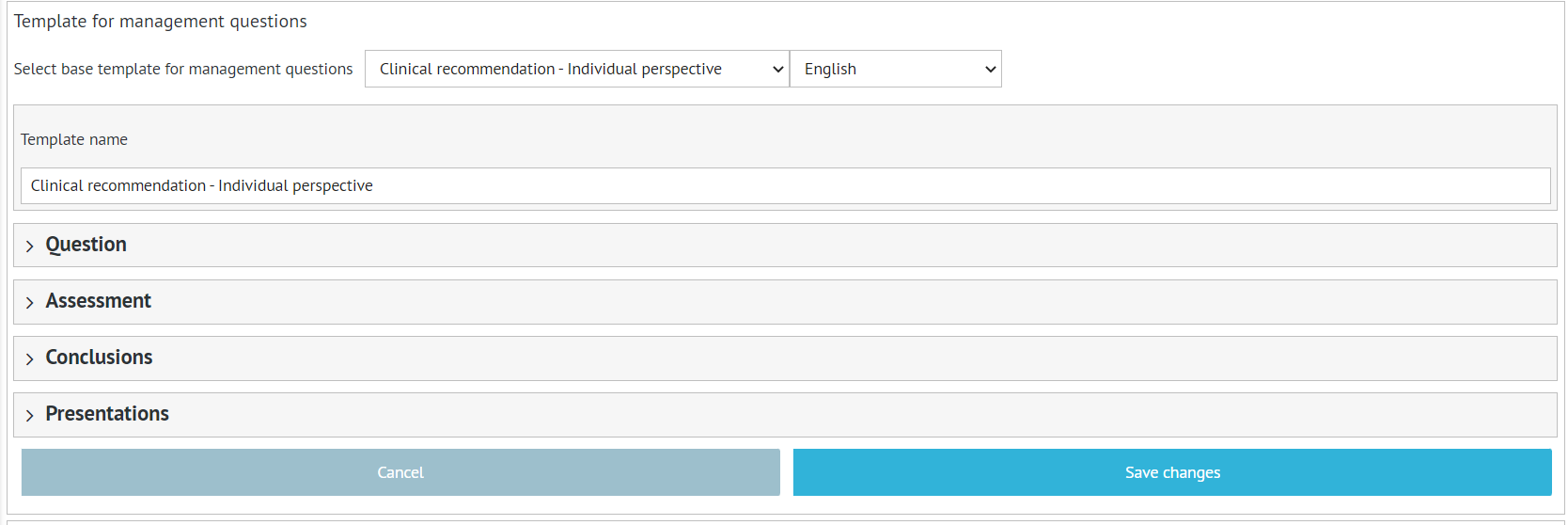
When you open the EtD template for editing, you can see the tabs with four major parts of the EtD.
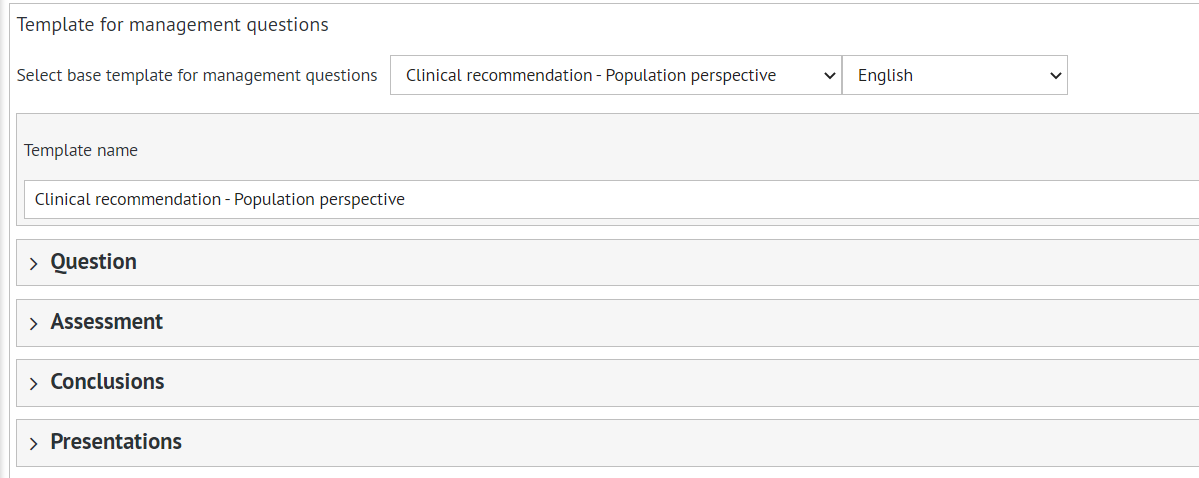
- Question -> This section describes the details of the PICO question as background for the recommendation and conflicts of interest of the panel members
- Assessment -> This section contains various criteria for judging the intervention and comparison in order to decide which is better
- Conclusions -> This section contains the recommendation itself as well as justification and additional considerations and remarks
- Presentations -> This section describes the three presentation formats that can be used for disseminating your work
You can unfold each of these parts to see the elements inside.
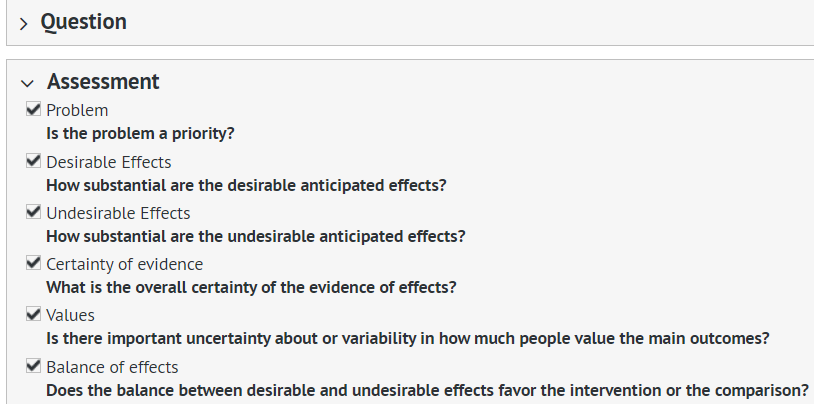
If you decide that an element or a criterion is not applicable in your case, you can unmark it. This way, it will be removed from all the questions in your project.
Once you unmark all the relevant elements, you need to save changes with the button below.
2.4 Adding a custom criterion
In the case of the Assessment part of the EtD, apart from the standard criteria of a template, you can add one criterion of your own. This option is available at the bottom of the Assessment list when you open the EtD template for editing.

To edit the criterion, you need to use the pencil icon on the right-hand side.
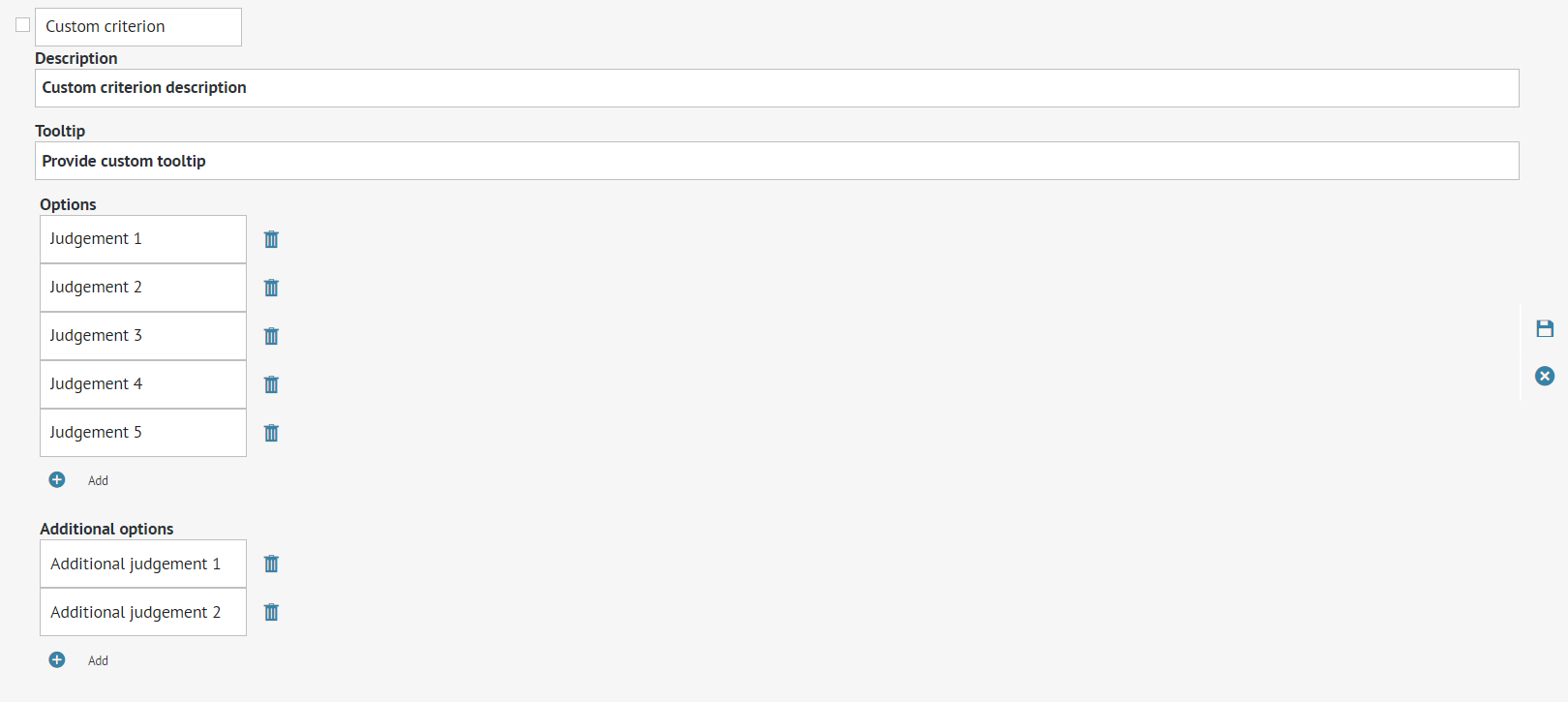
You will then have the option to:
- rename the criterion
- provide the description of the criterion (or the auxiliary question to which the criterion should answer)
- provide a tooltip (the explanation which shows when hovering the cursor over the criterion in the EtD)
- list the options and additional options
Once you've entered all the details, you must ensure the box next to the custom criterion is ticked, save the changes with the floppy disc icon on the right-hand side and then with the button at the bottom.
3. Templates for management questions
The following templates are available for management questions:
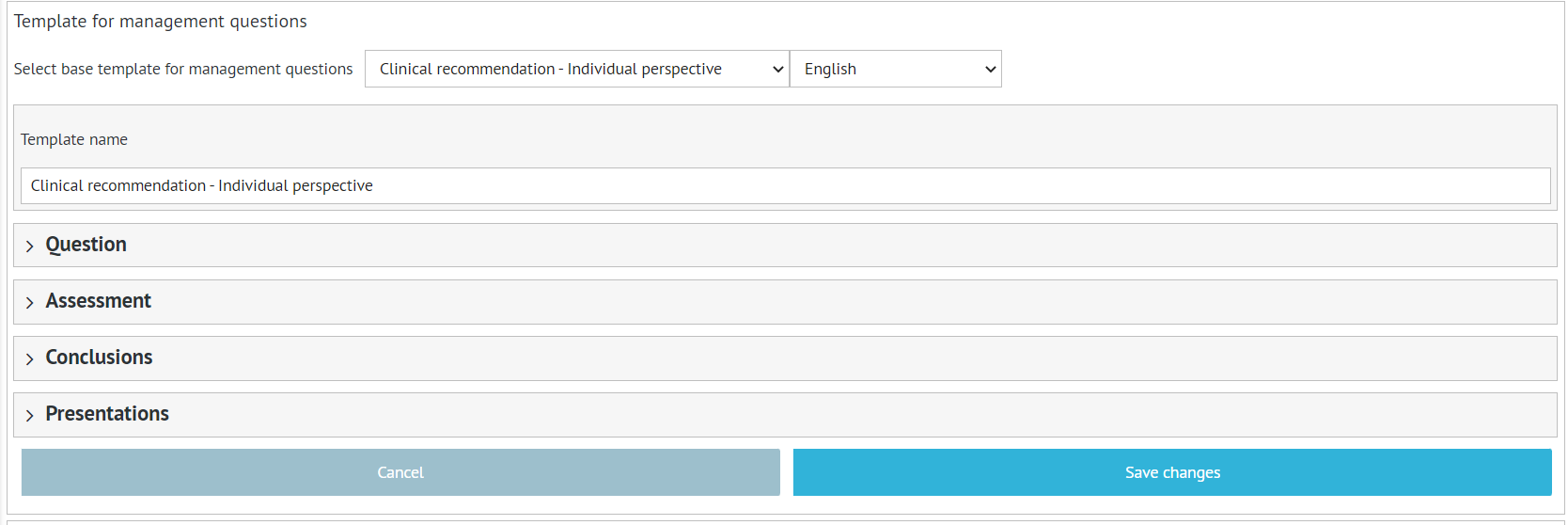
- Clinical recommendation - Individual perspective
- Clinical recommendation - Population perspective
- Coverage Decision
- Health system and public health recommendation
- Health system and public health decision
- WHO INTEGRATE
Regardless of the template, all EtDs are organised into three sections.
- Question -> This section describes the details of the PICO question as background for the recommendation and conflicts of interest of the panel members
- Assessment -> This section contains various criteria for judging the intervention and comparison in order to decide which is better
- Conclusions -> This section contains the recommendation itself as well as justification and additional considerations and remarks
Template | Clinical recommendation - Individual perspective | Clinical recommendation - Population perspective | Coverage Decision | Health system and public health recommendation | Health system and public health decision | WHO INTEGRATE |
Question section | ||||||
Population | ✔ | ✔ | ✔ | Problem | Problem | ✔ |
Intervention | ✔ | ✔ | ✔ | Option | Option | ✔ |
Comparison | ✔ | ✔ | ✔ | ✔ | ✔ | ✔ |
Main outcomes | ✔ | ✔ | ✔ | ✔ | ✔ | ✔ |
Setting | ✔ | ✔ | ✔ | ✔ | ✔ | ✔ |
Perspective | ✔ | ✔ | ✔ | ✔ | ✔ | ✔ |
Background | ✔ | ✔ | ✔ | ✔ | ✔ | ✔ |
Conflict of interests | ✔ | ✔ | ✔ | ✔ | ✔ | ✔ |
Assessment section | ||||||
Problem | ✔ | ✔ | ✔ | ✔ | ✔ | Balance of health benefits and harms |
Desirable Effects | ✔ | ✔ | ✔ | ✔ | ✔ | Human rights |
Undesirable Effects | ✔ | ✔ | ✔ | ✔ | ✔ | Socio-cultural acceptability |
Certainty of evidence | ✔ | ✔ | ✔ | ✔ | ✔ | Health equity, equality, and non-discrimination |
Values | ✔ | ✔ | ✔ | ✔ | ✔ | Societal implications |
Balance of effects | ✔ | ✔ | ✔ | ✔ | ✔ | Financial and economic considerations |
Resources required | x | ✔ | ✔ | ✔ | ✔ | Feasibility and health system considerations |
Certainty of evidence of required resources | x | ✔ | ✔ | ✔ | ✔ | Quality of Evidence |
Cost-effectiveness | x | ✔ | ✔ | ✔ | ✔ | x |
Equity | x | ✔ | ✔ | ✔ | ✔ | x |
Acceptability | ✔ | ✔ | ✔ | ✔ | ✔ | x |
Feasibility | ✔ | ✔ | ✔ | ✔ | ✔ | x |
Conclusions section | ||||||
Type of recommendation | ✔ | ✔ | Type of decision | ✔ | Type of decision | ✔ |
Recommendation | ✔ | ✔ | Decision | ✔ | Decision | ✔ |
Justification | ✔ | ✔ | ✔ | ✔ | ✔ | ✔ |
Subgroup considerations | ✔ | ✔ | Restrictions | ✔ | ✔ | ✔ |
Context and system considerations | x | x | x | x | x | ✔ |
Implementation considerations | ✔ | ✔ | ✔ | ✔ | ✔ | ✔ |
Monitoring and evaluation | ✔ | ✔ | ✔ | ✔ | ✔ | ✔ |
Research priorities | ✔ | ✔ | ✔ | ✔ | ✔ | ✔ |
4. Templates for diagnostic questions
The following templates are available for diagnostic questions:
- Tests - Clinical recommendation - Individual Perspective
- Tests - Clinical recommendation - Population Perspective
- Tests - Coverage decision
Here you can find their general comparison in terms of which elements they include. Regardless of the template, all EtDs are organised into three sections.
- Question -> This section describes the details of the PICO question as background for the recommendation and conflicts of interest of the panel members.
- Assessment -> This section contains various criteria for judging the intervention and comparison in order to decide which is better.
- Conclusions -> This section contains the recommendation itself as well as justification and additional considerations and remarks.
Template | Clinical recommendation - Individual perspective | Clinical recommendation - Population perspective | Coverage Decision |
Question section | |||
Population | ✔ | ✔ | ✔ |
Intervention | ✔ | ✔ | ✔ |
Comparison | ✔ | ✔ | ✔ |
Purpose of the test | ✔ | ✔ | ✔ |
Role of the test | ✔ | ✔ | ✔ |
Linked treatments | ✔ | ✔ | ✔ |
Anticipated outcomes | ✔ | ✔ | ✔ |
Setting | ✔ | ✔ | ✔ |
Perspective | ✔ | ✔ | ✔ |
Background | ✔ | ✔ | ✔ |
Subgroups | ✔ | ✔ | ✔ |
Conflict of interests | ✔ | ✔ | ✔ |
Assessment section | |||
Problem | ✔ | ✔ | ✔ |
Test accuracy | ✔ | ✔ | ✔ |
Desirable Effects | ✔ | ✔ | ✔ |
Undesirable Effects | ✔ | ✔ | ✔ |
Certainty of the evidence of test accuracy | ✔ | ✔ | ✔ |
Certainty of the evidence of test's effects | ✔ | ✔ | ✔ |
Certainty of the evidence of management's effects | ✔ | ✔ | ✔ |
Certainty of the evidence of test result/management | ✔ | ✔ | ✔ |
Certainty of effects | ✔ | ✔ | ✔ |
Values | ✔ | ✔ | ✔ |
Balance of effects | ✔ | ✔ | ✔ |
Resources required | ✔ | ✔ | ✔ |
Certainty of evidence of required resources | ✔ | ✔ | ✔ |
Cost effectiveness | ✔ | ✔ | ✔ |
Equity | ✔ | ✔ | ✔ |
Acceptability | ✔ | ✔ | ✔ |
Feasibility | ✔ | ✔ | ✔ |
Conclusions section | |||
Type of recommendation | ✔ | ✔ | Type of decision |
Recommendation | ✔ | ✔ | Decision |
Justification | ✔ | ✔ | ✔ |
Subgroup considerations | ✔ | ✔ | ✔ |
Implementation considerations | ✔ | ✔ | ✔ |
Monitoring and evaluation | ✔ | ✔ | ✔ |
Research priorities | ✔ | ✔ | ✔ |
RELATED ARTICLES
Was this article helpful?
That’s Great!
Thank you for your feedback
Sorry! We couldn't be helpful
Thank you for your feedback
Feedback sent
We appreciate your effort and will try to fix the article